- Sustainability
- Posts
- ♻️ Decarbonizing steel industry, Sunlight & water for clean energy, and Banana waste for textile
♻️ Decarbonizing steel industry, Sunlight & water for clean energy, and Banana waste for textile
🌍 Step into the eco-sphere with IE for the 13th issue of Sustainability
In partnership with


Is Your Coffee Tasting Off? It’s Time to Descale!

Coffee connoisseurs know the secret to a perfect cup starts with a clean machine. But descaling can seem like a chore, so many put it off until it's too late.
Enter ACTIVE Cleaners - Our powerful formulas remove nasty limescale, calcium, and buildup so you can get the most of your coffee-- and even prolong the life of your machine!
Compatible with all Coffee Brewers from K-Cup & Pod Machines to standard coffee pots. The best part is you can get 20% off a Year's supply today!
Welcome back to the thirteenth edition of Sustainability, a weekly newsletter by Interesting Engineering.
Last week, a Nature study examined 30 years of data analyzing the role of forests in absorbing carbon dioxide from the atmosphere. They found that forests globally have captured and stored 100 billion tonnes of CO2 in the last three decades. However, deforestation has led to disturbances in the carbon sequestration process, weakening forests' ability to absorb CO2. This prompts the need for action including better land management and reforestation.
This week, scientists in Scotland are working towards decarbonizing the steel industry. They developed a model to simulate scenarios where climate interventions enhance steel production. The model showed that integrating carbon removal technologies could make lower-grade ores commercially viable, providing a sustainable path for the industry.
In other news, researchers at Oregon State University devised a photocatalyst that enables the high-speed, high-efficiency production of hydrogen. This new material converts sunlight and water into clean energy. They used an MOF to derive a metal oxide heterojunction – a combination of two materials with complementary properties – to make a catalyst that, when exposed to sunlight, quickly and efficiently splits water into hydrogen.
In a reverse situation, the shift to renewable energy seems to have endangered 4,642 species of vertebrates. A new study noted that mineral extraction worldwide through mining, quarrying, and drilling for oil and gas is threatening these species. Recently, UK scientists with the ambition to boost sustainability in Pakistan developed a new technology to convert banana waste into textile fibers. The waste left over from producing the banana textile will be employed to produce renewable energy.
With that, I, Shubhangi Dua, your author for Sustainability, welcome you to the thirteenth edition.
IE+ SUPPORT INTERESTING ENGINEERING
Invest In Science And Engineering
Subscribe to IE+: Join us as we delve into exclusive weekly content on sustainable technology. You now have the opportunity to join our eco-conscious community, gaining access to top stories on sustainability in STEM, along with recommendations and tips to embark on your own sustainable journey—all ad-free.
NEWS BULLETIN
☀️ New material turns sunlight, and water into green hydrogen with increased efficiency In just one hour, a gram of RTTA-1 was able to produce over 10,700 micromoles of hydrogen.
🚙 Clean irony: Electric cars, green energy production could be killing 4,642 species Among all species, fish are particularly at high risk from mining, with 2,053 species affected, followed by reptiles, amphibians, birds, and mammals.
🍌 New method turns banana waste into green textiles, energy Scientists estimate that the banana agricultural waste in Pakistan could yield 57,488 million cubic meters of syngas.
♨️ Bio-inspired, 3D-printed solar steam generators to desalinate, purify water The SSG absorbs sunlight, converts it into thermal energy then uniformly transfers it to water, resulting in its absorption of heat and subsequent evaporation, as per scientists.
🌋 Aerosols, water vapor from Tonga eruption cooled Earth, researchers say Large volcanic eruptions have significantly cooled the global climate by blocking sunlight with aerosols.
☢️ China to launch world’s first thorium molten salt nuclear power station in 2025 While uranium reactors depend on solid fuels, thorium reactors use an environmentally safer liquid fuel that operates at normal pressure.
🔥 California wildfire explodes, becomes largest in US Thousands of firefighters were battling a rapidly growing wildfire in northern California on Saturday after the blaze more than doubled in size in a 24-hour span.
🌊 MIT produces hydrogen fuel using soda cans, seawater, caffeine The aluminum is pretreated with a rare metal alloy that can react with seawater to generate hydrogen.
MUST READ
Scientists from Scotland have developed a ‘bespoke techno-economic model’ to depict scenarios where steel manufacturing has been boosted and improved with climate change interventions.
Striving to decarbonize the steel industry, Heriot-Watt University's Research Centre for Carbon Solutions conducted a study to mitigate deep emissions rendered from the steel industry by integrating with financial levers. This particularly hopes to result in the feasible use of lower-grade iron ore. The shift can help address the scarcity of high-quality ore and make the production process more sustainable and cost-effective.
Phil Renforth, a professor involved in the research, explained that this could open up the potential for a carbon-negative steel industry through innovative decarbonization technologies and opportunities for investment in the UK.
The researchers noted that they primarily focused on measures such as directly reduced iron (DRI), biomass-based reductants, and carbon capture and storage, which the International Energy Agency has identified as the most likely net zero pathways.
The UK has approximately 180 million tons of slag, a byproduct of steel manufacturing. This byproduct contributes to carbon emissions, so scientists have developed DRI technology, allowing iron production without emitting CO2. This process uses natural gas or hydrogen as a reductant instead of coke.
Additionally, technologies replacing fossil fuels for biomass material are encouraged alongside capturing emissions from steel plants and storing them underground instead of letting them flow in the air, which could further contribute to the decarbonization of the steel industry. They extract CO2 directly from the atmosphere and react with the slag to sequester carbon.
Renforth says surprisingly, the model shows that once financial incentives and carbon removal technologies are in place, lower-grade ores become commercially viable. Current production favors higher-purity ore, which is cheaper to use because it requires less energy and materials.
He added, “The model shows that by integrating advanced emission reduction technologies and using lower-grade iron ore, we can create a sustainable, economically viable path towards a carbon-negative steel industry.”
The study was published in the Journal of Cleaner Production earlier yesterday [July 29, 2024].
OTHER IMPORTANT UPDATES
🪸 In a 1st, ‘dark oxygen’ factory discovered 13,000-feet below sea surface
🛰️ Star Catcher: World’s first space solar power station gets funding
‼️ Some condom and lubricant brands contain alarming levels of PFAS – study
🚤 Photos: Self-driving electric water taxis to redefine coastal transport
⚙️ World’s largest floating wave energy device deployed in Hawaii
🔥 A ‘catastrophic’ start to wildfire season in Oregon sparks alarm
🚘 China’s Made-in-Europe EVs Pose New Threat to Region’s Carmakers
🪰 Waste warriors: Scientists gene-engineer flies to clean up human mess
🏍️ Photos: World’s first hydrogen-powered motorcycle Kawasaki Ninja H2 HySE debuts
🏭 Act to shrink your carbon footprint
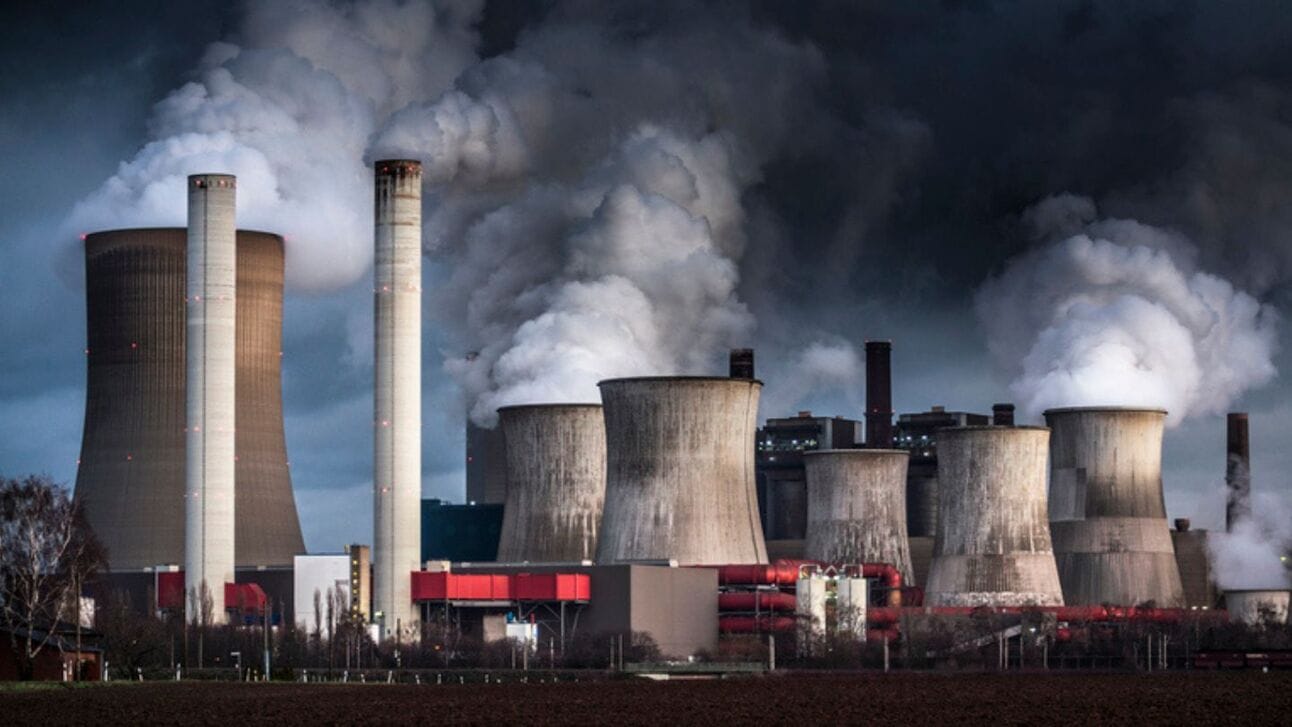
Credit: Schroptschop / iStock
Have you sat down and considered the products you use on a regular basis and where the waste ends, whether it’s food waste, plastic waste, electronic waste, or even recyclable waste? Most importantly, have you considered the harmful emissions each consumption renders?
According to the United States Environmental Protection Agency, the term – emissions describes the gases and particles put into the air or emitted by various sources. Gases that trap heat in the atmosphere are called greenhouse gases (GHGs). Emissions are the result of various GHGs such as carbon dioxide (CO2), Methane (CH4), Nitrous oxide (N2O), and Fluorinated gases. Harmful emissions from such gases released into the air are the significant driver of climate change.
What are the biggest sources of emissions in the world?
Inventory of U.S. Greenhouse Gas Emissions and Sinks noted in 2017 that CO2 accounts for 76 percent of total GHGs. While CH4, mainly caused by agriculture accounts for 16 percent of total GHGs, and N2O, mostly from industry and agriculture, contributes six percent to global emissions.
World Resources Institute reported in 2020 that in the energy sector, the biggest source of greenhouse gas emissions comes from producing heat and electricity, which accounted for 31.8 percent of total emissions in 2019 (15.8 gigatons of CO2 equivalent). This is followed by transportation, which is responsible for 17 percent of emissions (8.4 gigatons), and manufacturing and construction, which contributes 12.7 percent (6.3 gigatons) of the total emissions.
The United Nations emphasized that fossil fuels, particularly coal, oil, and gas are the largest contributor to global climate change, accounting for over 75 percent of GHG emissions and nearly 90 percent of all CO2 emissions.
How to tackle some of these harmful emissions?
The United Nations has listed some actions that individuals can execute at home, including saving more energy at home, replacing gas-based personal vehicles with walking, cycling, or public transport, or otherwise switching to an electric vehicle. Reduce, reuse, repair, and recycling are heavily encouraged and are the terms to live by where possible. The UN also encourages global citizens to eat more vegetables, reduce meat and dairy consumption, and reduce throwing away food. Consuming plant native species, cleaning up your environment and, not being afraid to speak up and join the team trying to mitigate climate change.
More to come in the forthcoming edition of Sustainability.
 | Written by Shubhangi Dua Sustainability Journalist
|

Additional Reads
🚨 The Blueprint: IE's daily engineering, science & tech bulletin.
⚙️ Mechanical: Explore the wonders of mechanical engineering.
🧑🏻🔧 Engineer Pros: The latest in engineering news, career updates, and insider knowledge.
🧠 AI Logs: Insights into the intricacies and developments within the realm of artificial intelligence.
🎬 IE Originals: Weekly round-up of our best science, tech & engineering videos.
🛩️ Aerospace: The latest on propulsion, satellites, aeronautics, and more
⚡Electrical: From AI to smart grids, our newsletter energizes you on emerging tech.
🎓 IE Academy: Master your field and take your career to the next level with IE Academy
Want to share your feedback? [email protected]


