- Sustainability
- Posts
- 🏟️ Ozone layer depletion simulated, Sustainable Paris Olympics, and Organic solar panels
🏟️ Ozone layer depletion simulated, Sustainable Paris Olympics, and Organic solar panels
🌍 Step into the eco-sphere with IE for the 11th issue of Sustainability

INTERESTING ENGINEERING SHOP




Welcome back to the eleventh edition of Sustainability, a weekly newsletter by Interesting Engineering.
Last week, chemists from the Yokohama National University in Japan sought to make chemistry greener and devised a new catalyst called RhRu bimetallic oxide clusters (RhRuOx/C). These were derived from two metals, Rhodium (Rh) and Ruthenium (Ru), combined with oxygen as the sole oxidant. The metal-based catalyst successfully produced more efficient and sustainable esters.
This week, an international team of scientists developed a model to simulate the depletion of the ozone layer despite healing efforts. After observing the data from the 2019/20 Australian wildfires, experts discovered that wildfire-induced aerosols facilitated heterogeneous chemical reactions in the stratosphere, which paradoxically led to both ozone depletion and ozone increase at different atmospheric layers.
Did you hear yet? Paris Olympics starting later this month from July 26 until August 11, is all set to prioritize sustainability at the world’s biggest official summer Olympiad multi-sport event. France has built a €175 million aquatics center near the Stade de France. The center, which has an innovative roof design and is home to the country’s largest urban solar-energy farm, is also a tourist attraction. Organizers have installed 11,000 seats made from recycled plastic at two locations. Additionally, the 6,000 seats, made of recycled plastic bottles, will be reduced post-Games, replaced by a bouldering wall, padel tennis courts, and five-a-side pitches.
In other updates, Swedish scientists at Chalmers University of Technology are developing a completely new heat exchanger alongside energy-efficient engines that allow for safe and efficient hydrogen flights for heavy-duty vehicles. Scientists say the first commercial hydrogen flights could take to the Nordic skies as early as 2028. Meanwhile, researchers at the University of Kansas have made a breakthrough in understanding organic semiconductors, hinting at more efficient and versatile solar cells. Scientists say organic solar panels are particularly suitable for use in next-generation green and sustainable buildings.
With that, I, Shubhangi Dua, your author for Sustainability, welcome you to the tenth edition.
IE+ SUPPORT INTERESTING ENGINEERING
Invest In Science And Engineering
Subscribe to IE+: Join us as we delve into exclusive weekly content on sustainable technology. You now have the opportunity to join our eco-conscious community, gaining access to top stories on sustainability in STEM, along with recommendations and tips to embark on your own sustainable journey—all ad-free.
NEWS BULLETIN
🚙 Climate activists vandalize Tesla Cybertruck during its presentation in Germany The act has sparked a heated debate on climate negligence and the environmental impact of the Cybertruck.
🌞 Silicon days over? Organic solar panel turns 20% of sunlight into electricity Organic semiconductors offer a viable alternative to silicon-based photovoltaic panels at a lower cost and with greater flexibility.
🏟️ Plastic-bottle seats, seashell paths, wooden pool to grace green Paris Olympics The Paris Olympics prioritize sustainability with venue upgrades, 11,000 recycled plastic seats, and an eco-friendly Aquatics Centre.
✈️ All travel within 750 miles could be made with hydrogen planes by 2045: Study Swedish scientist says the first commercial hydrogen flights in Sweden could be in the air as early as 2028.
🍌 New banana-based biomaterial to make lightweight parts for cars, bicycles Fiber is extracted from the stem or trunks of banana trees which boosts the strength needed in material for composite reinforcements in automotive applications.
🚘 China asks WTO to set up panel for US electric vehicle subsidies dispute China has requested the World Trade Organization set up an expert panel to help settle a dispute over electric vehicle subsidies under the U.S.
🌬️ US could get low-cost clean hydrogen from offshore wind farms: Study The goal of the U.S. Department of Energy (DOE) to produce clean hydrogen at a low-cost depends on the technology and the location of the production.
MUST READ
Scientists were initially confounded when they discovered a hole in the ozone layer in 1985. 24-year-old Jonathan Shanklin, a junior researcher at the British Antarctic Survey (BAS), spotted the hole in the invisible shield protecting the Earth from solar radiation.
Soon after the finding, the Montreal Protocol, an international treaty executed in 1987, began protecting the planet from harmful Ultraviolet (UV) radiation. Despite signs of healing, the layer is faced with new challenges.
According to a statement by the Max Planck Institute for Chemistry, researchers observed a dramatic increase in stratospheric aerosols during the 2019/20 Australian wildfires. Stratospheric aerosols are tiny particles that can influence climate, health, and atmospheric chemistry.
Now, the team of researchers has developed a model of the wildfire smoke plume to precisely simulate its unexpected movement into the middle stratosphere, reaching an altitude of about 35 kilometers.
They demonstrated this by spotlighting a new phenomenon – smoke-charged vortex (SCV) – a major driver of lofting pollutants into the stratosphere. The study noted that SCV was induced and maintained by absorbing aerosols played a key role in lofting pollutants from the lower stratosphere and nearly doubled the southern hemispheric aerosol burden in the middle stratosphere.
In an ambition to uncover the mechanisms behind wildfires impacting the stratospheric dynamics and ozone chemistry, scientists showed the potential risks exacerbated by climate change.
Prof. Hang Su from the Institute of Atmospheric Physics at the Chinese Academy of Sciences, one of the corresponding authors of the study explained that SCV led to at least a doubling of the aerosol burden in the southern hemisphere’s middle stratosphere.
“Once reaching such high altitudes, these aerosols initiated a series of chemical reactions at their surface that impacted ozone concentrations.”
The statement noted these wildfire-induced aerosols facilitated heterogeneous chemical reactions in the stratosphere, which paradoxically led to both ozone depletion and ozone increase at different atmospheric layers.
According to the study, SCVs offset up to 70 percent of the ozone depletion in the lower stratosphere. As global warming continues, SCVs are expected to become more frequent and significantly impact wildfire effects on stratospheric aerosols and chemistry.
Prof. Yafang Cheng, another leading author from the Max Planck Institute for Chemistry explained that the study uncovers an unexpected and crucial mechanism by which the absorbing aerosols in wildfire smoke, such as black carbon, can induce and sustain enormous smoke-charged vortices spanning thousands of kilometers, fundamentally changing the stratospheric circulation.
“The vortices can persist for months, carrying aerosols deeply into the stratosphere and affecting the ozone layer in distinct ways at different altitudes. This highlights the need for continued vigilance and research as climate change progresses.”
The findings were published on July 12, 2024, in the journal – Science Advances.
OTHER IMPORTANT UPDATES
⚡️ Carrefour partners with GreenYellow to install solar panels at its French stores
🔋 Breakthrough AI model uses 93% less time to present perfect battery cells
🚗 Sceptics say EVs will overwhelm the grid. In fact, they could be part of the solution
🌪️ What Twisters gets right — and wrong — about tornado science
⛴️ US: World’s first hydrogen-powered commuter ferry to begin plying soon
✈️ New weightless carbon fiber battery could make cars, planes 50% lighter
🛩️ Scientists find biology hack to quadruple electric aircraft battery life
♻️ Act to shrink your carbon footprint
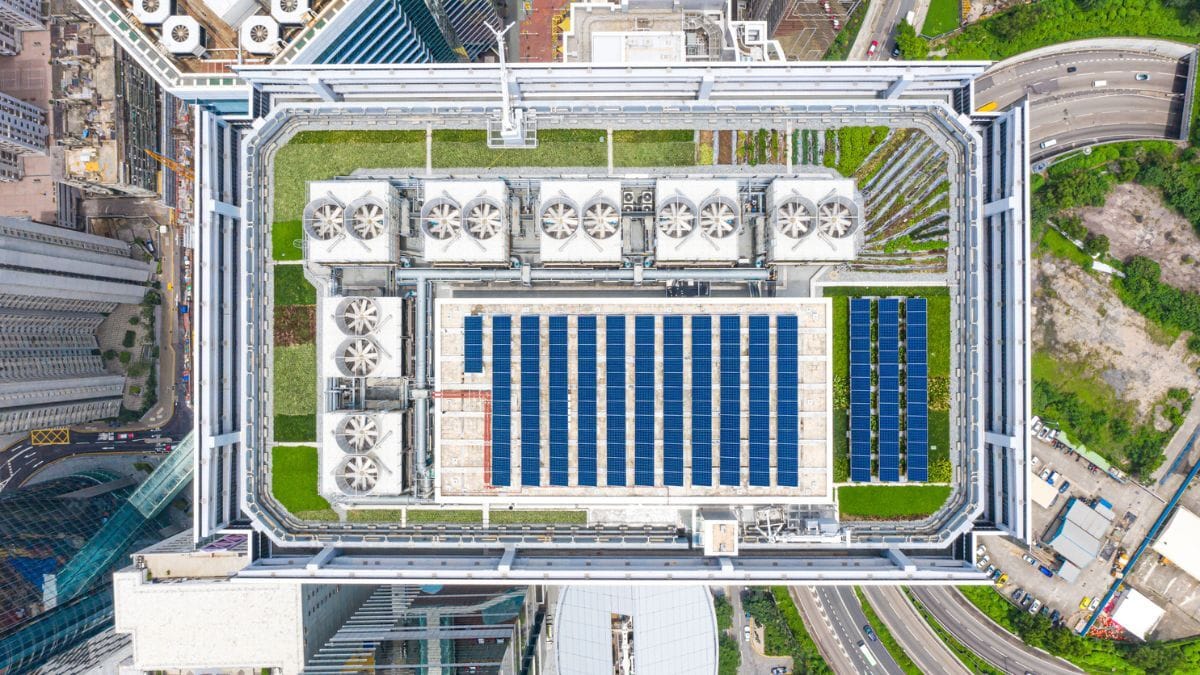
Credit: CHUNYIP WONG / iStock
Despite the depleting quality of our planet owing to human-induced climatic consequences, Earth’s residents are now gearing up and executing strategies to combat the climate crisis. Here are some companies introducing changes to reduce carbon emissions, with the common goal of becoming more energy-efficient across a myriad of technologies.
Conscious digital tech practice
Adventure Driven Threads (ADT), a London-based company that connects businesses with ethical branding solutions, recently spotlighted the carbon footprint of digital technologies and provided actions individuals can take to curb it. Easily doable by tech-savvy people and people with minimal tech interest, ADT suggests optimizing device usage by turning off devices when not in use. The firm recommends opting for energy-efficient devices with longer lifespans and mindful steaming by downloading content for offline streaming, especially when repeating. Good email practice also encourages limiting the size of email attachments, unsubscribing from unnecessary newsletters, and deleting old emails to reduce data storage needs. Lastly, supporting green data centers that use renewable energy to power their data centers has been emphasized.
Tracking company’s emission source
Another solution guide for a company has been suggested by OffsetGo, India's first blockchain-based carbon marketplace. They suggest beginning with a Comprehensive Carbon Audit to pinpoint major emission sources and establish a baseline for improvement among several other strategies. Optimize energy usage, and enhance transportation efficiency through initiatives such as carpooling, public transit use, transitioning to electric or hybrid vehicles, and implementing improved waste management practices (such as launching recycling programs, reducing single-use plastics, and promoting sustainable materials). They also suggest engaging employees in sustainability efforts by educating them on emission reduction and supporting remote work to minimize commuting emissions. Lastly, monitoring progress with carbon management software to track emissions and report results transparently to stakeholders is now imperative to contribute to a greener future.
ESG strategies reducing carbon footprint:
Solutions30, a Luxembourg-based integrated services company that aims to make digital technologies easily accessible to everyone identified three significant sources of emissions. As a result, they pushed their Environmental, Social, and Governance (ESG) team to manage the emissions across daily operations, facility electricity consumption, and subconductor activities since 2022. To reduce its carbon footprint, the firm particularly aimed to optimize the travel of 16,000 technicians and adopt more eco-friendly fuels. They also set ambitious targets verified by EcoAct, aligned with Science Based Targets initiative (SBTi) standards, and embraced digital transformation to make technology more energy-efficient. For instance, they deployed electric charging stations and photovoltaic systems.
More to come in the forthcoming edition of Sustainability.
 | Written by Shubhangi Dua Sustainability Journalist
|

Additional Reads
🚨 The Blueprint: IE's daily engineering, science & tech bulletin.
⚙️ Mechanical: Explore the wonders of mechanical engineering.
🧑🏻🔧 Engineer Pros: The latest in engineering news, career updates, and insider knowledge.
🧠 AI Logs: Insights into the intricacies and developments within the realm of artificial intelligence.
🎬 IE Originals: Weekly round-up of our best science, tech & engineering videos.
🛩️ Aerospace: The latest on propulsion, satellites, aeronautics, and more
⚡Electrical: From AI to smart grids, our newsletter energizes you on emerging tech.
🎓 IE Academy: Master your field and take your career to the next level with IE Academy
Want to share your feedback? [email protected]


